Web Development

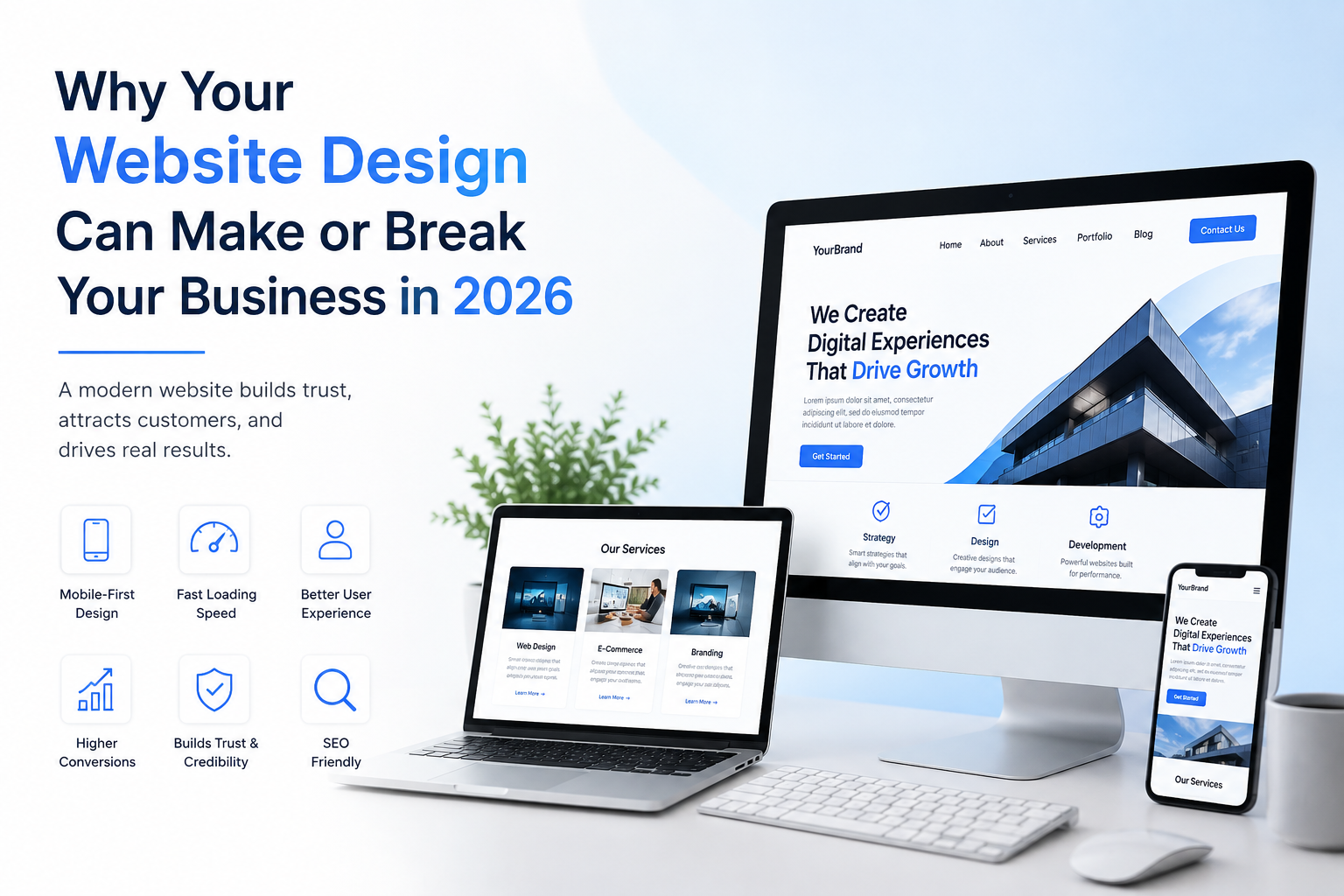
Why Your Website Design Can Make or Break Your Business in 2026

Discover why website design matters in 2026 and how a modern, mobile-friendly, and SEO-optimized website can strengthen your brand, improve user experience, boost search visibility, increase conversions, and support long-term business growth. Learn how smart web design, faster performance, clear navigation, and conversion-focused experiences can turn your website into a powerful business asset.

31 Aug 2026, 10:04 AM
Why Your Website Design Can Make or Break Your Business in 2026

Why Your Website Design Can Make or Break Your Business in 2026

In 2026, your website is no longer just an online brochure. It is your digital storefront, brand ambassador, sales tool, and first point of contact with potential customers.

Before contacting your team, requesting a quote, or making a purchase, customers often visit your website to decide whether your business is worth their time. A slow, outdated, confusing, or poorly designed website can create doubt within seconds. On the other hand, a modern, fast, mobile-friendly website can build credibility, communicate your value, and guide visitors toward taking action.

This is why professional website design has become a critical part of business growth in 2026.

Whether you run an eCommerce store, real estate company, creative agency, professional service, or growing brand, the quality of your website can directly influence how customers perceive your business.

1. Your Website Creates the First Impression

You only get one chance to make a strong first impression.

When someone lands on your website, they immediately notice its visual appearance, layout, navigation, images, typography, and overall professionalism. If the website looks outdated or difficult to use, visitors may question whether the business itself is reliable.

A modern business website design should communicate professionalism within seconds.

Clean layouts, strong visual hierarchy, consistent branding, high-quality images, clear messaging, and intuitive navigation help visitors understand who you are and what you offer.

In 2026, businesses cannot afford to treat website design as an afterthought.

Your website should instantly answer three questions:

  • Who are you?
  • What do you offer?
  • Why should customers choose you?

If visitors cannot find these answers quickly, they may move to a competitor.

2. Mobile-First Design Is No Longer Optional

People are browsing, researching, comparing, and purchasing from smartphones every day.

That makes responsive web design one of the most important elements of a successful website.

A responsive website automatically adapts its layout to different screen sizes, including smartphones, tablets, laptops, and desktops. But mobile-friendly design is more than simply shrinking a desktop website.

Buttons need to be easy to tap. Text needs to remain readable. Images need to load efficiently. Menus need to be simple. Forms should be easy to complete.

A website that works beautifully on desktop but frustrates mobile users can quickly lose potential customers.

In 2026, mobile-first website design should be considered the foundation of your digital presence rather than an optional feature.

3. Website Speed Can Influence User Experience

Nobody wants to wait for a slow website.

A visitor may leave before your homepage even finishes loading if pages take too long to appear. Slow performance can create a poor user experience and reduce the likelihood that visitors will explore additional pages.

That is why website performance optimization should be part of every modern web development strategy.

Several factors can affect website speed, including:

  • Large image files
  • Unoptimized videos
  • Excessive scripts
  • Poor hosting performance
  • Unnecessary plugins
  • Inefficient code
  • Poorly optimized website assets

Businesses should focus on creating websites that are visually impressive without sacrificing performance.

The goal is simple: make the website look better while making it work faster.

4. Good UX Design Turns Visitors Into Customers

A beautiful website is not necessarily an effective website.

This is where UX design becomes important.

User experience focuses on how easily visitors can interact with your website and complete their intended actions.

Imagine a customer wants to request a quote. If they have to search through multiple pages to find your contact form, they may give up.

A strong website guides visitors naturally from one step to the next.

For example:

Landing Page → Service Information → Benefits → Portfolio → Call to Action → Contact

This journey should feel effortless.

Effective website user experience combines attractive design with practical functionality. Every button, menu, section, image, and piece of content should have a purpose.

5. Your Website Design Can Affect Conversions

The ultimate goal of most business websites isn't simply to generate traffic. It is to generate results.

Those results could include:

  • Product purchases
  • Quote requests
  • Contact form submissions
  • Phone calls
  • Appointment bookings
  • Newsletter sign-ups
  • Demo requests

This is where conversion-focused web design makes a difference.

A conversion-friendly website uses clear calls-to-action, persuasive content, simple navigation, trust signals, strong visuals, and strategically placed contact options.

Instead of asking visitors to figure out what to do next, your website should guide them.

For example, instead of a generic button saying “Learn More,” a service business could use:

“Get a Free Quote”

An eCommerce brand might use:

“Shop the Collection”

Clear CTAs tell users exactly what action to take.

6. Your Website Represents Your Brand

Your website should feel like an extension of your brand.

Imagine a premium fashion brand with a website that uses poor-quality images, inconsistent typography, and an outdated layout. The mismatch can immediately weaken the brand's perceived value.

Brand consistency in web design helps create a stronger and more memorable identity.

Your colors, fonts, photography, graphics, tone of voice, icons, and layouts should work together.

For businesses targeting premium customers, design quality can be particularly important because customers often associate visual presentation with perceived quality.

Your website should not simply tell customers that your brand is professional.

It should look professional.

7. Modern Website Design Trends Are Changing

Website design continues to evolve rapidly.

In 2026, businesses are moving toward experiences that are cleaner, faster, more interactive, and more personalized.

Some important website design trends in 2026 include:

Minimalist Interfaces

Clean layouts help visitors focus on the most important information without overwhelming them.

Micro-Interactions

Small animations and interactive elements can make a website feel more responsive and engaging when used strategically.

Personalized Experiences

Websites can increasingly deliver content and experiences that are more relevant to different audiences.

Immersive Visuals

High-quality photography, video, motion graphics, and interactive elements can help brands communicate their story more effectively.

Conversational Experiences

AI-powered chat and conversational interfaces are becoming increasingly common for answering questions, guiding visitors, and supporting customer journeys.

However, trends should never replace strategy.

A website does not become effective simply because it uses animations or an AI chatbot. Every design decision should support the customer's needs and the business objective.

8. SEO and Website Design Work Together

Great design can attract visitors, but SEO-friendly web design helps people find your website in the first place.

Businesses need to think about SEO from the beginning of the web design process.

Important areas include:

  • Mobile responsiveness
  • Page speed
  • Clear website structure
  • Search-friendly content
  • Descriptive page titles
  • Internal linking
  • Image optimization
  • Accessible navigation
  • Structured content

A website should be designed for both people and search engines.

This is particularly important in 2026 as search continues to evolve beyond traditional keyword-based results. Businesses need useful content, strong topical relevance, clear information, and a technically sound website to compete for visibility across modern search experiences.

9. Security Builds Customer Trust

Website design is also connected to trust.

Visitors are more comfortable interacting with a website that feels secure, professional, and well maintained.

For businesses collecting customer information, security should be a priority.

An outdated website with broken pages, expired certificates, suspicious pop-ups, or poorly maintained plugins can quickly damage credibility.

A professional website development company should consider security, performance, usability, and scalability alongside visual design.

10. An Outdated Website Can Cost You Business

One of the biggest mistakes businesses make is keeping the same website for too long simply because it still works.

But “working” is not the same as “performing.”

Your website may need a redesign if:

  • It looks outdated.
  • It performs poorly on mobile devices.
  • Pages load slowly.
  • Visitors struggle to find information.
  • Your branding has changed.
  • Your competitors have significantly better websites.
  • Your conversion rate is declining.
  • Your website is difficult to update.
  • Your content no longer reflects your current services.

A website redesign should not be about changing colors and adding a new homepage.

It should be an opportunity to rethink your customer journey, content, SEO, performance, functionality, and conversion strategy.

11. Your Competitors Are Only One Click Away

The digital marketplace is more competitive than ever.

If your website provides a poor experience, customers have plenty of alternatives.

A potential customer can compare your website with several competitors within minutes. This means your website needs to communicate your unique value quickly.

What makes you different?

Why should customers trust you?

What results can you deliver?

Why should they contact you?

Your website should answer these questions through a combination of strategic web design, compelling content, strong branding, and clear calls-to-action.

What Should a High-Performing Website Look Like in 2026?

A successful business website should combine:

Modern Design + Fast Performance + Mobile Responsiveness + Strong UX + SEO + Clear Messaging + Conversion Optimization

None of these elements works effectively in isolation.

A visually impressive website with poor SEO may struggle to attract visitors.

A fast website with confusing navigation may fail to convert them.

A website with excellent SEO but outdated branding may struggle to build trust.

The strongest websites bring everything together.

3 Signs Your Business Needs a Website Redesign

Not sure whether your current website needs an upgrade? Look for these warning signs:

1. Your Website Looks Outdated

If your website looks like it belongs to another era, visitors may assume your business hasn't evolved either.

2. Your Website Isn't Mobile-Friendly

If users have to zoom, pinch, or struggle with navigation on their phones, you are creating unnecessary friction.

3. Your Website Isn't Generating Results

If traffic is coming to your website but visitors aren't contacting you, purchasing, or requesting information, your design and conversion strategy may need attention.

A redesign should focus on business performance, not just aesthetics.

Frequently Asked Questions

1. Why is website design important for businesses in 2026?

Website design influences how customers perceive your brand, interact with your business, and decide whether to take action. A modern website can strengthen credibility, improve user experience, support SEO, and increase conversions.

2. How often should a business redesign its website?

There is no fixed timeline for every business. However, you should consider a website redesign when your website looks outdated, performs poorly on mobile devices, loads slowly, is difficult to navigate, or no longer supports your business goals.

3. What makes a good website in 2026?

A successful website should be mobile-friendly, fast, secure, easy to navigate, visually professional, SEO-friendly, and focused on conversions. It should also provide useful content and a smooth experience across devices.

Final Thoughts

In 2026, your website is one of the most important assets your business owns.

It can strengthen your brand, attract potential customers, support your marketing campaigns, improve credibility, and generate new business. But if your website is outdated, slow, difficult to navigate, or poorly optimized, it can do the opposite.

Your website doesn't just represent your business. It represents how your business is experienced online.

That's why investing in professional website design and web development is not simply an aesthetic decision. It is a business decision.

If your website hasn't evolved with your customers, your brand, and the digital landscape, 2026 could be the right time to rethink it.

Because a better website doesn't just look better  it works better for your business.

Ready to Build a Better Website?

At Image Solutions India, we help businesses create modern, responsive, performance-focused digital experiences designed around their brand and business goals.

From website design and development to user experience and digital optimization, the focus is simple: create a website that looks professional, performs smoothly, and helps your business grow.

Is your website ready for 2026? It's time to make your digital presence work harder.
Ready for a Better Website?

At Image Solutions India, we create modern, responsive, and conversion-focused websites built to help your business grow.

Let’s turn your website into your strongest digital asset.

Start Your Website Project Today – www.imagesolutionsindia.com


The Human-AI Hybrid Advantage

While automated background removal models can process basic isolated shapes in milliseconds, complex apparel transparencies, loose hair textures, and fine footwear mesh panels require human expert QA oversight for precision. By combining automated batch pre-processing with expert pen-tool clipping workflows, global brands can reduce editing production timelines significantly.

Need high-precision background masking for an upcoming catalog launch? Upload your raw image files and receive your first 3 assets completely free of charge.

Get Free Sample ➜
Related Insights & Case Studies

Want Better Real Estate Listings Without Spending Hours Editing?

Want Better Real Estate Listings Without Spending Hours Editing?

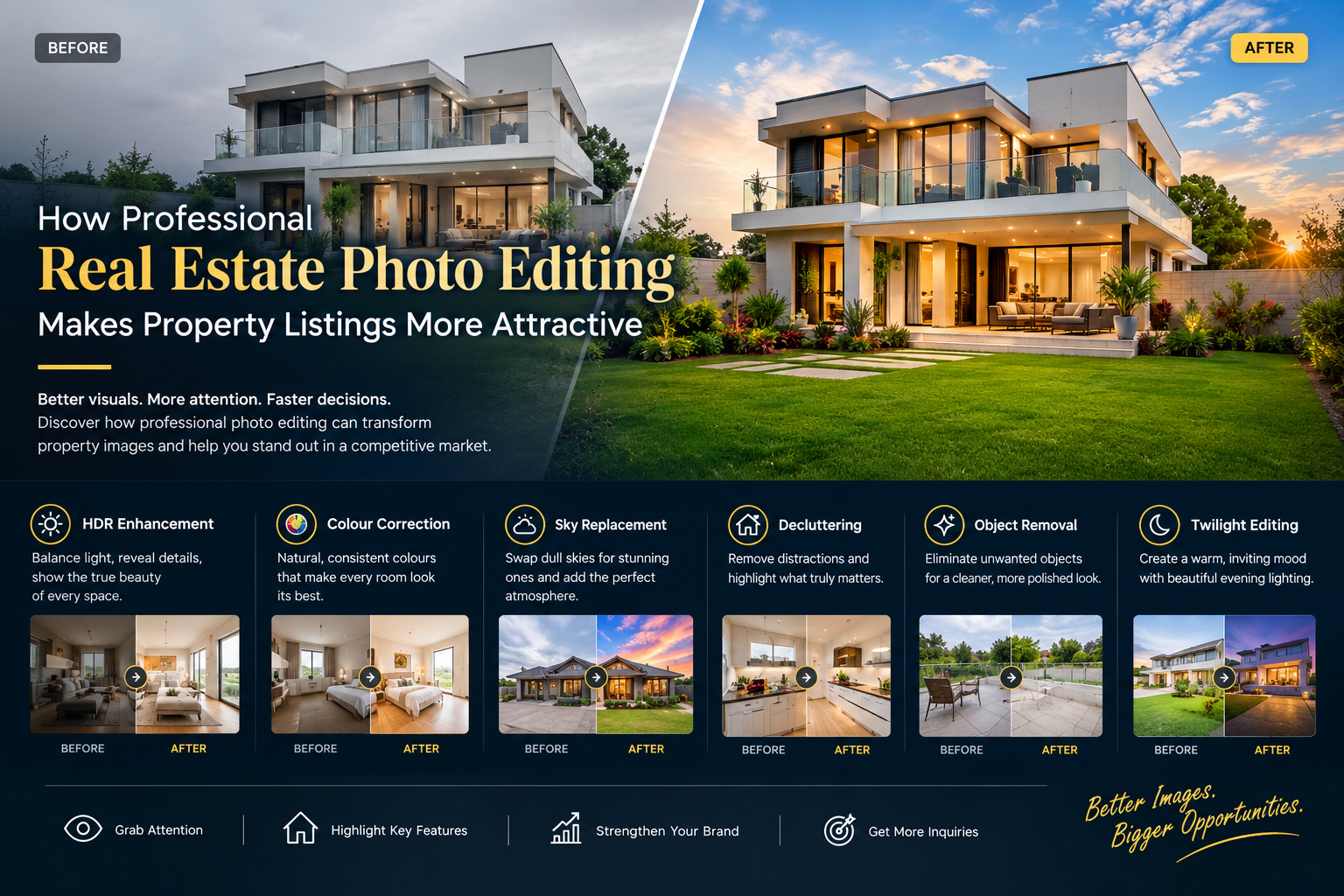
From exposure and color correction to HDR enhancement, perspective correction, sky replacement, object removal, and consistent batch editing, the right post-production workflow helps real estate photographers and agencies deliver high-quality images faster without compromising a natural look. Spend less time behind the screen. Deliver better property images. Win more listings.

Read Full Article

The Wedding Ends. The Editing Begins: How Professional Post-Production Helps Photographers Scale During Peak Season

The Wedding Ends. The Editing Begins: How Professional Post-Production Helps Photographers Scale During Peak Season

Professional post-production can transform how wedding photographers manage peak season. From RAW photo editing and color correction to retouching, batch processing, and quality control, the right workflow helps photographers handle large volumes without compromising their signature style. Discover how wedding photo editing services and photo editing outsourcing can improve turnaround times, increase capacity, reduce editing backlogs, and give photographers more time to focus on clients.

Read Full Article

What Makes a Photo Look Expensive?

What Makes a Photo Look Expensive?

Discover what makes a photo look expensive from lighting and composition to color correction, retouching, perspective, and professional photo editing.

Read Full Article